

Chapter 1~Green
The color of oil is green, and even if money throughout the
world has all the colors of the rainbow and then some, it is the greenback,
both literally and figuratively, that has defined the value of oil.
Nouveau Riche
Corruption thrived through the days of abundance and was
even more pervasive in the lean days following and still thrives today. Oil
producing countries generally comprise the top three on everybody’s list
of corrupt countries in the world. This should not be surprising in nations
that have no democratic institutions or economic infrastructure, and are
geographically and culturally far from the egalitarian notions of the United States and Europe
that emerged from the industrial revolution. Nowhere did oil wealth have the
impact that it brought on the Arab
Peninsula, and nowhere
else did money become so synonymous with national identity. Tribal fiefdoms,
quickly renamed as countries in vast deserts with indescribable national
borders, suddenly found themselves with per capita incomes at the level of
Europe’s—with a couple of them surpassing the per capita income of
the United States.
“With all thy getting, get understanding.”
Understanding the
Big Picture
At the time of the writing of this book (2000), the world
consumes 200 million barrels of oil per day equivalent. Of this, 40 percent is
oil, 22 percent is gas, 24 percent is coal, 6 percent is nuclear, and 8 percent
comprises all other energy forms, mostly hydroelectric. (The renewables, wind,
solar and the rest combined, comprise less than 0.5 percent.) Contrary to
popular notions, there was never really an oil glut at the end of the
millennium. For a decade, world energy demand increased at 1.5 to 2 percent per
year. In 1998, with many economies in recession, energy demand still increased,
albeit only by 0.5 percent. Demand started to increase again in 1999, back in
the range of 1 to 2 percent. In fact, oil consumption increased almost
monotonically ever since the original Col. Drake well in 1859, with exceptions
in 1974-75 and 1980-81. The supply side of the equation is widely, and
inappropriately, characterized by the Saudi cheap-oil-forever myth. This myth
was firmly ensconced in the public discourse by a March 6,1999 cover story in
The Economist titled, “Drowning In Oil.” The article was laced with
warnings that the Saudis may “throw open the taps,” and
“herald an era of $5 oil.” The specter of oil selling for $2 or $3
per barrel was even raised.
The up-front costs associated with activating these fields
are some of the highest in the world. Developments costs range from $3,500 per
barrel per day of new production in Saudi Arabia
and Venezuela, almost 3.5
times the costs in the U.S. Gulf of Mexico, to $7,500 per barrel per day in Iraq, to as high as $15,000 per barrel per day
in Kuwait.
It is constant and real intervention—people, drill bits and
rigs—not market or political movements, that sustains production; without
this intervention, production in every field in the world will decline. This is
the simple physical law at the core of the petroleum business, a law that is
poorly understood by most analysts. Without new capacity, global oil production
would decline at 6 to 10 percent per year.
Investing in the
Petroleum Industry
A repeatable 25-percent annual return on investment, built
on an understanding of the physical, financial and political aspects of the
petroleum business, is clearly a get-rich-slowly recipe. A tremendous
investment opportunity underlies the dramatic, ongoing shift from oil to
natural gas as the basic fuel of the U.S. economy. Many pundits
correctly point to the use of hydrogen and fuel cells for powering the
next-generation automobile, but very few recognize or admit that natural gas
will be the dominant source of hydrogen. Someone who understands the industry
is far more capable of capitalizing on the value of natural gas than any
MBA-trained “analyst.” While many are abandoning the oil industry
as a dour investment, those who really understand the business are quietly
reinvesting. The pump price is now almost inconsequential compared to the cost
of car lease payments, insurance, and maintenance, which combined, may be 10
times the cost of the fuel. The wise investor buys for the long-term because
energy is the world’s biggest business, and it continues to move,
unstoppable, forward.
Chapter 2~Black
Oil is black because it is a mixture of many compounds with
various light-absorbing properties. The blackness contrasts the transparency of
water, also mined from the earth, and contributes to the great mystery of oil.
All gases, liquids and solids are compounds consisting of smaller parts, or
elements. Crude oil consists primarily of two elements, carbon and
hydrogen. Oil is a derivation of petroleum (rock oil), named from the ancient
Greek observation of black liquid coming from the ground to the surface. The
greatest portion of oil found on the surface of the earth still seeps naturally
from the ground.
Refineries separate crude petroleum into individual or
groups of components of similar properties and uses such as butane, jet fuel,
automobile gasoline and heating fuel. Refiners "reform" smaller
molecules or "crack" larger molecules yielding more valuable and
useful compounds. Refined petroleum is supplied to the petrochemical industry
to create synthetic materials such as polymers, plastics and fibers which
exist in virtually every modern industry, from food packaging to thread for
clothing to computer casings and parts and everything in-between. The most
commonly understood everyday use for petroleum is energy
conversion—powering transportation, generating electricity, and
providing direct heating of spaces.
The Origin and
Migration of Petroleum
Petroleum is derived from organic (originally living) matter
that has been deposited and buried for tens-to hundreds-of-millions of years.
One of these geologic eras is the Jurassic. Because petroleum generally has a
lower density than the present water the migration is always upward, with oil
sitting on top of water. If gas is present, it will be at the very top, above
oil. There are no pools, caverns or underground rivers of oil, although the
popular press often alludes to them. Petroleum inhabits the interconnected
pore spaces of the rock. If the rock's porosity (a measurable quantity denoting
the portion of the rock that consists of pores) is not large enough, the volume
of petroleum present is not commercially interesting. Although petroleum tends
to move upward, floating on water and finding its way through layers of porous
rock: it normally gets trapped en route by a layer of rock with no porosity
called a cap rock, whose weight causes the buried fluids to be under pressure.
This is the nature of a petroleum reservoir, a porous rock containing fluid under
pressure, awaiting discovery.
Exploration
Technology is still inexact and its results uncertain. A
good modern geoscientist is a rare individual, an almost mystical combination
of intuition, education and good fortune. Not all petroleum reservoirs
have obvious surface manifestations, so geologists use a lot of inferences and
conjectures, often quite intelligently and sometimes not. Until the 1980s,
drilling was a hit-or-miss operation. Few technologies in the history of the
petroleum industry can match the importance of seismic measurements and their
impact on exploration and, eventually, production. A seismic wave migrates into
the ground, traversing layers (strata) to depths of 3 kilometers or more. The
signal en route reflects from certain layers and bounces back, undergoing
refraction. Its wave responses detected by a line of receivers and collected,
visualized and analyzed as a 3-D image to provide new insights, such as the
detection of gas and the movement of fluids within the reservoir. Future production
is more likely to come through the use of new technology and re-exploration
techniques in exploiting known petroleum provinces to locate bypassed oil or
oil that was previously considered marginally economic.
Drilling and Well
Construction
Today rotary drilling is an involved operation with
heavy-duty equipment, a variety of fluids and sophisticated instrumentation.
Oil production formations are typically found at depths of 0.5 to 2.5 miles (1
to 4 kilometers); gas reservoirs are often 3.5 miles (6 kilometers) deep or
deeper. The size and technology of modern drilling operations are greatly
advanced compared to the original Drake well in 1859. Because of repeated oil
boom-and-bust cycles, the number of wells drilled annually fluctuates
wildly—between 40,000 and 80,000 per year since 1980. About half of these
wells are drilled in North America, and the
other half, in the rest of the world. An array of high-tech tools and
instrumentation now makes it possible to take measurements-while-drilling and
to track the advance of the drill bit in real time and to guide the drilling
process inside a target formation. Once a target formation has been identified
and a well drilled, the well’s petroleum potential must be evaluated. If
the well holds sufficient potential, it is prepared for production, or
“completed.”
Production and
Decline
The well production rate is reservoir pressure driving
fluids into the well and permeability dictating how fast the well can produce
the fluid. Because fluid converges from a large drainage area into a well, the
condition of the near-well zone becomes crucial. The permeability of this
zone is frequently damaged during drilling and well construction limiting
production from the well. Hydraulic fracturing—injecting highly
pressurized fluids at a very high rate to create a crack in the reservoir
propping fractures open with millions of pounds of clean, uniform sand, results
in a permeability that is larger than the surrounding reservoir. All
production becomes self-defeating as time advances as underground fluid
withdrawal brings decline in the reservoir pressure and “empties”
the well. A fully developed field will reach a maximum output level
marking the beginning of reservoir maturity or “old age”, and then
begin its varying rate of decline. In the oil field means any or all of three
things: reservoir pressure depletion, the existence of a much larger water
fraction in the production, and production from lower-permeability reservoirs.
In all cases, maturity is marked by lower petroleum production rates and higher
lifting costs per barrel of oil produced. The life of each reservoir and even
entire petroleum provinces is predictable, from young and prolific to old and
difficult.
Chapter 3~Red, White & Blue
American Red, White and Blue is the color of oil. With roots
in northwest Pennsylvania in the 1860's, returning Civil War soldiers the
original oilfield workers, to today, with Texans and Okies scattered all around
the globe, their “can do” attitude practiced under particularly hostile
conditions, no other industry better exemplifies certain traits that define the
American character.
America at The Center of The World's Biggest Business
A proclamation made in 1943 by U.S. Interior Secretary
Harlod Ikes, implying that the United
States, and in particular its government,
should secure foreign oil reserves. The most obvious turn would be for the
United States to look to the Arabian Peninsula, loosely mandated by Britain
since the end of World War I, in particular, one point and place—the
Middle East.
In 1943, the U.S.
government could have had the largest of all national oil companies.
The implications could have been enormous:
·
Had the U.S.
government been the controlling authority, instead of Exxon and the rest, Saudi Arabia
might not have nationalized its oil industry as it did in 1976;
·
In the USA,
if Exxon’s eventual role were to be practiced by the U.S.
government, the evolution of competing companies would have been dramatically
different, both domestically and globally.
As it happened, while not owning reserves directly, the U.S. government
still felt a need to be involved; regulations became the proxy. The private U.S. concerns were left to do their negotiating
and self-financing to develop the deserts of Saudi Arabia and other far reaches
of the globe. This is what defined the American oil business.
It was only 80 years earlier that the creative psychology
and dynamics of the post-Civil war industrial boom gave rise to a man named
Rockefeller.
His huge imprint on Exxon and the modern U.S. Corporation is
manifest by contemporary business concepts such as standardization,
distribution, vertical integration, research and technology, waste
minimization, and even corporate public relations. Way beyond oil, Rockefeller
created American-style capitalism.
By mid-1863, 20 refineries were operating in the Cleveland area. At that
critical moment, and maybe for the last time in his storied life, Rockefeller
did not enjoy any leverage over his competitors. But he would create his advantage
quickly. If nineteenth-century nihilist Friedrich Nietzsche argued that the
“language of good and evil” was not rooted in truth or reason, but
in the “will to power,” it was Rockefeller as a monopolist that
embodied the philosophy. He started by imparting in the business his extreme
sense of thrift and economizing, not from the office but in the refinery works.
Within a year, refining had replaced produce as the most
profitable part of the business.
Thus, Rockefeller, at age 25, certain that petroleum was and
would be the basis of an enduring economic revolution, gained control of
Cleveland's largest refinery. Bolstered by the Lake
Shore deal, Cleveland
soon surpassed Pittsburgh
as the leading refining center. In 1870, the partnership of Rockefeller,
Andrews and Flagler was replaced by a joint-stock company called the Standard
Oil Company (Ohio),
with John D. Rockefeller as president. At this stage, Standard Oil controlled
10 percent of American oil refining.
In early 1872, Standard Oil's market share was 25 percent
and Rockefeller felt he could easily collect up the rest.
At age 38, in 1877, Rockefeller controlled 90 percent of the
oil refined in the United
States, and by default, the world.
Few realize that the Standard Oil Trust was not established
until 1882, five years after his dominance was established.
By the end of the decade, Standard's stranglehold on world
and U.S. markets began to
erode slightly with the advent of California
production, the Nobels and Russian oil, and Marcus Samuel and Shell Transport
& Trading in Asia. The first automobiles
were introduced—making John D. Rockefeller much wealthier in retirement
than when he was working.
It wasn't until almost 10 years into his retirement that Ida
Tarbell used the emerging mass communication media to incite public sentiment
against Rockefeller. Rockefeller became somewhat of a master of public
relations, and eventually won considerable favor with the public. But much of
the damage had already been done; the government had already seized on the
public sentiment and the antitrust wheels were set irreversibly into motion.
Among the many industrial trusts of the day, Standard Oil was ultimately
singled out by President Theodore Roosevelt as emblematic of the dark side of
trusts.
On November 18, 1906 the federal government filed suit
against Standard Oil under the previously toothless Sherman Antitrust Act
(1890), naming as defendants: Standard Oil, 65 subsidiary companies and a host
of Standard executives, starting with John D. Rockefeller. They were charged
with monopolizing the oil industry and restraining trade by use of railroad
rebates, abuse of their pipeline monopoly, predatory pricing, industrial
espionage, and secret ownership of ostensible competitors. The suit called for
dissolving the trust, breaking it up into its component companies. The final
judgment was handed down on May 15, 1911 by Supreme Court Chief Justice Edward
White.
Standard Oil was given six months to spin off its
subsidiaries.
It is ironic that by the time the verdict was handed down,
after Roosevelt was out of office and 20 years
into Rockefeller's retirement, the court’s decision was no longer needed.
The entire monopoly was made possible by the world's production being
conveniently and extendedly confined to one small part of Pennsylvania. With exploding production in Texas, Oklahoma, California, the Middle East, Southeast Asia and Russia,
Standard Oil’s dominance was not sustainable.
The breakup did have the enduring effect of strengthening
the government's hand, providing a necessary balance in dealing with the
massive U.S.
industrial and capitalist machine that has lasted until today. The oil business
in the United States
has never completely recovered in its public image.
The Modern
Manifestations
The modern recombination of Exxon has conjured images of the
old Standard Oil, but the comparison is simply not credible. Together Exxon and
Mobil today would hold less than 15 percent share of U.S. petroleum retail sales and
less than 4 percent of daily world oil production, trailing national oil
companies. The combined oil reserves of Exxon and Mobil are even less, closer
to 1 percent of the world oil.
The Debate for the
World
The role that petroleum plays in promoting personal and
national wealth puts it squarely at the center of great sociopolitical issues.
Standard Oil became both the symbol and the real
standard-bearer of a political and social system, ideologically contrasted to
the doctrines of fairness of other systems, such as communism and socialism,
nurtured primarily among European intellectual elites.
Although communism and similar systems have clearly failed
in their applications, and while free enterprise has clearly prevailed, i.e.
"we won," the sentiments that carried their debate still linger today
and may re-emerge. Almost all petroleum exporting countries are unraveling.
Large petroleum companies, "Big Oil," the
descendents of Standard Oil (which after modern mega-mergers is just Exxon) and
the two other post-colonial companies, Shell and BP, are now, and will
certainly be in the future, in the center of not just the production and
retailing of petroleum, but also in the political events spawned by it.
The frustration felt by some politicians and the educated
elites of petroleum producing countries is plainly seen.
Here is where the dark side of Big Oil becomes woven with
its bright side. Technology, market savvy and management are their forte.
Chapter 4~Red
Red is the color of oil—as red as the blood of the
millions who died in two great world wars and many other conflicts in this
century. Access to oil was central to the causes and prosecution of the wars.
If there is one thing that
characterizes the modern era it is the wide separation from public
pronouncements in the media and what is really happening.
Governments have mastered the art of
public deception, found in its most unabashed admission by Josef Goebbels,
Hitler’s Minister of Propaganda “a lie, often repeated, becomes
reality.” The trouble is that often those who make the public
pronouncements also come to believe their own created reality.
Natural Resources,
Oil and War
The search of natural resources and
the coveting or defending of wealth is the clear connection that has most often
precipitated war. In the twentieth century, oil has led to world domination
which brought about ideological and international supremacy. The search for oil
during a shortage precipitated war.
Britain
and the United States
benefited from the rapid and disparate economic evolution and inequitable
benefits from technological advances. Russia was the first European
country to feel the impact of oil development. Two of Europe’s
most prominent merchant families, the Rothschilds and the Nobels, won petroleum
concessions in Imperial Russia. By 1880, the area around Baku on the Caspian Sea
was producing much of European oil and for the next 30 years, the Rothschilds
and the Nobels would control Russian production.
Chaos, capriciousness, a disdain for the Empire’s
non-Russian nationalities, and contempt for its own peasants characterized the
rule of Czar Nicholas II. The entire country was sinking into desperation.
Petroleum production, and the “sellout” to foreign capitalists (the
Rothschilds’ Jewish-ness was always in the background) became the
lightning rod for labor unrest and the underground proletariat movement.
One of the main labor agitators in Baku, Joseph Djugashvili, wrote much later
that his effort was to create “unlimited distrust for the oil
industrialists.” Eventually, Djugashvili became better known as Joseph
Stalin.
At the same time, the managing
director of Royal Dutch, Henri Deterding, won over Marcus Samuel’s Shell
trading company in London,
and Royal Dutch/Shell was born. In 1911 the company, amid the Russian
pre-revolutionary fervor, bought out the Nobels and the Rothschilds in Russia and
became the petroleum power to be reckoned with in the European continent.
The triumphs of Royal
Dutch/Shell—a group masterminded by a Dutchman, resident of Britain, and
with large ownership by Marcus Samuel, a British Jew—did not sit well
with many Britons and especially Charles Greenway, managing director of
Anglo-Persian. His oil company, under the control of Scottish merchants, had
drilled for oil in Persia
(encompassing today’s Iran
and Iraq)
and found shows in 1903. In 1909, a huge discovery was proven. Repeatedly,
Greenway invoked the national interest and spoke of Royal Dutch/Shell as a
“foreign syndicate.”
In 1911, Winston Churchill, became
convinced: a petroleum-powered navy provided better flexibility, strength and
speed than coal. The challenger was Germany. Conflict between Britain and Germany
appeared imminent in 1911, but the precursor to future battles took place in Persia. Lord
Gurzon, Viceroy of India had
earlier called Persia
a piece “on a chessboard upon which is being played out a game for the
domination of the world.”
World War I
A war that everybody expected, but no one predicted to last
as long as it did, broke out in 1914.
World War I became a watershed event
in human history; in the course of the war, the internal combustion engine,
using petroleum exclusively, was pitted against horses and men. There was no
contest.
Before the end of the war, armored
vehicles provided a devastating punch and aircraft brought in a new and
formidable dimension.
The petroleum-driven war also
destroyed a social upper class and replaced it with a lower class, while in Russia an
entire social order was violently overthrown by the Bolshevik Revolution. Even
in the rest of Europe, the destructive and
powerful petroleum-driven, mechanized innovations erased the gold-tassled,
horse-mounted, battle-field-picture-perfect aristocratic dandy.
Britain,
with no oil of its own, secured access and ownership to Anglo-Persian oil to
supply the demand for petroleum which increased exponentially during the war.
Battlefield vehicles, unilaterally-converted to petroleum-power, tilted the
balance of the war to Britain’s
side.
New petroleum-run technological
advances were constantly emerging. War entry by the petroleum-rich United States during the last 18 months of the
conflict nailed the coffin on petroleum-denied Germany.
The war was won establishing first the
Britain
then the United States Anglo-Saxon culture, ideals and language as the dominant
influence in the world.
The Period between
the Great Wars
Germany
and Japan in Asia, clearly willing to compete in the world of ideas,
culture and economic supremacy, did not accept the order after World War I. The
two nations presumed ideological and even racial superiority, and thus with
mathematical certainty moved towards World War II to overthrow the Anglo-Saxon
victory.
If the importance of resources and oil
brought about victory and Anglo-Saxon supremacy in World War I, it became clear
in the period between the wars that any allusions by other nations to compete
would require access to economic resources, primary among which was oil.
In 1932, Standard Oil of California
struck oil in Bahrain,
signed an agreement with Saud in 1933—all demanded in gold and Arabia
entered the petroleum world with a commanding United States occupation.
Petroleum supplies from the Arabian
Peninsula and Persia fueled
the upcoming Allied war effort, World War II, in Europe and the Middle East and
became a decisive factor for victory in the confrontation with Germany and Japan.
World War II
In their ideology of supremacy, Germany
and Japan
felt clearly that petroleum resources were vital and, even when found in other
countries, were theirs by the right of the mighty.
Hitler, who ascended to power in 1933,
viewed the situation in this way: The German population was too small and the territory of Germany was too economically limited to
guarantee the survival of his racially superior people in the international
arena of racial competition. Immediate expansion of territory and on a vast
scale was the only solution.
Much later, in June 1941, two days
before the invasion of Russia,
Hitler was explicit: “What one does not have, but needs, one must
conquer.”
Following the ascension of Hirohito to
the Imperial throne in 1926, expansion of the Japanese Empire accelerated,
first into China and then
throughout Asia. In December 1941, the
Japanese-held territories covered an area as large as any in history.
Heralding things to come, the level of
atrocities perpetrated by the Japanese military on the local population was at
par with the most murderous actions by Hitler’s Special Task Forces in Eastern Europe and during the Russian invasion.
Coveting the oil of Indonesia, and after the German occupation of
the Netherlands in 1940, Japan immediately sent a delegation to Batavia, the capital of East Indies.
They were rebuffed; increasing Japan’s
self-image as being under siege. The Japanese population was increasingly
hateful of the ABCD countries (America,
Britain, China and the Dutch) for depriving Japan of such a
vital resource.
By July 1941, Japan occupied almost all of Indochina.
President Roosevelt came to the
conclusion that the only way out of the difficulties of the world was to cut
off supplies to the aggressor nations “particularly... to their supply of
fuel to carry on the war.”
Roosevelt, still hoping to avoid war, did not impose a
complete oil embargo on Japan
(in spite of considerable political pressure) until the final escalation of
hostilities in July and August 1941, leading to Pearl
Harbor.
On June 22, 1941, German forces invaded the Soviet Union. Hitler’s general and specific aims
were expressed clearly earlier: “against the Baku oilfields.”
In December 1941, just as Japan was launching its attack on Pearl Harbor,
a Russian counteroffensive aided by the relentless winter repelled the German
stranglehold on Moscow,
which came within a few miles from the city from three sides.
Facing a seemingly impenetrable front
spanning the Soviet Union from North to South,
Hitler planned a summer offensive in the south expressly to secure oil
supplies. In July, 1942, German forces pushed through, and in early August they
crossed the Kuban River as an imminent threat to the Caucasus
oil fields. On August 9, the German army reached the giant oilfield in Maikop
and found that the Soviets had blown up all petroleum facilities and wells. The
same day they arrived in Krasnodar;
the story was the same there and everywhere else. The Germans never reached Grozny, the center of the Caucasus
petroleum production. Baku
would not be occupied. Hitler was deprived of his prize and on January 31,
1943, the beginning of the end had just begun for the Germans.
In Asia, the entire Japanese foray
into Indonesia and Southeast Asia was for oil. By the time Japan gained
complete control of the islands in March 1942, Dutch and American engineers who
manned the petroleum production operations and refineries had blown up the
facilities, Without a military counter-force, it did not take much time for the
Japanese to start petroleum production again and almost all was shipped to
Japan.
The American naval campaign took over
from that point. A war, first of attrition and then growing in intensity,
targeted oil tankers in particular.
By early 1944, the sinking of oil
tankers outpaced their construction, and oil imports to Japan fell to
less than 50 percent of their level a year earlier. By early 1945, they stopped
completely; Japan
was ripe for defeat.
The atomic bombs dropped in Hiroshima
and Nagasaki may have precipitated the Japanese
surrender, it is the petroleum shortage that brought Japan to its knees.
The Post-War Period
World War I was won by the Anglo-Saxon powers because they
had anticipated the need for petroleum and assured their supplies to
successfully prosecute their campaigns. World War II was a reaction by Germany and Japan to the domination by the
victors of the previous war. Petroleum has
been used as a weapon in winning the Cold War by the United States.
A
Remarkably Transparent Crisis
Access to petroleum and unhindered movement of the commodity
are crucial elements to both the welfare of the United States and the European
Union, and the health of international economy.
Iraq’s
invasion of Kuwait and the
Gulf War is an example of the length to which the United States will go to safeguard
a smooth petroleum economy.
The message was unmistakable.
Disturbing or threatening to disturb petroleum supplies and trading would not
be tolerated.
The stewardship of petroleum, as
perhaps the most vital commodity in the world economy today, has brought about
both power and responsibility for the United States. This is the century
of petroleum, and by implication this is the American Century, Pax Americana.
Chapter 5~Primary Colors
Money, technology and people are the primary colors—or
elements—of this industry.
The strength of the oil industry is not research or
technology development per se; it is that people innovate on the basis of
technological advances. International petroleum professionals live and work
there, helping to produce a commodity that is vital and a credible source of
income for the developed world. Oil people are not merely inconvenienced and
harassed, but have been kidnapped, and in some cases, murdered. Countries like Saudi Arabia, a self-professed devout and highly
exclusionary Moslem nation, and Venezuela, with a populist and
leftist government, make money, but not enough to be independent of the
Western infidels and capitalist. They have entire technology infrastructures
built expressly to reduce their dependence on the United States and Western
Europe but they lack technology momentum and remain heavily
dependent on the West.
Money
The petroleum industry and petroleum producing countries
have the money, or at least they have very large incomes becoming some of the
world’s most successful enterprises, earning many times the amount they
would have without petroleum.
The magnitude of investment can be gauged with what we have
called the activation or reactivation index. This is a measure of the total
investment required to establish access to new oil, expressed in dollars
per barrel per day of stabilized production.
In almost all petroleum-exporting countries, although the
reservoirs are prolific, local culture and deficient infrastructures result in
high costs of $3,500 per barrel of oil per day in Saudi
Arabia to $7,500 per barrel of oil per day of new
production in Iraq.
The activation index can also be very high in west Texas, on the order of $10,000. The costs
are low, but the area is mature and the most prolific reservoirs have been
depleted. Although a well might have been drilled for $500,000 in
1999—inexpensive by world standards—a good production rate would be
50 barrels of oil per day contrasted with the average well producing
almost 600 barrels of oil per day in Mexico
or 6,000 barrels of oil per day in Saudi Arabia.
Attracting investment money requires the presence of oil
(reserves), prolific reservoirs capable of delivering large production
rates, and low activation costs. Large amounts of money have always flowed
freely in the oil industry, with groups of investment banks routinely lending
$300 million to $500 million and more for projects around the world.
The amount of money that the oil industry moves and invests
is exceptionally large, but there is a thunderous, almost arrogant,
subtlety about the situation.
In this era of political correctness, companies are much
more likely to tout their “social spending” of a few
hundred-thousand-dollar contributions to the opera and the theater, other civic
causes, or the ubiquitous environmental and safety issues but the $1 billion
his or another company invests in a deepwater platform in the Gulf of Mexico, implying
a several-fold impact on the local economy, warrants barely a mention on the
business page.
Certainly, oil is money, and money is a requisite for
success in the petroleum business, but money alone is not enough.
Technology
Technology is neither a tangible possession nor a static
state. Many unique features distinguish the technology of the petroleum
industry. First, there is little doubt that technology is crucial, and that
deployment and integration of technology is essential to the industry’s success.
Yet, this technology is highly diversified and applied to industry segments
with different needs.
Seismic exploration and processing, enhanced oil recovery
and the construction of deepwater production facilities have little in common
yet the petroleum industry is the industry with the smallest R&D spending.
New technologies necessary for the mature fields are not cost-competitive in
the prevailing market. National oil companies have long implied that technology
is vital.
What should not create any confusion, but unfortunately
does, from soccer moms all the way to the U.S. president, is the role
technology can and cannot play in extending domestic petroleum reserves and,
especially, production. These concepts are central to our energy self-sufficiency,
economy and national security. Finding new reservoirs is the name of the game.
Technology that provides access to them is dominant over any
exploitation technologies for mature fields. The option is deep water, first in
the Gulf of Mexico, with estimated holds of 46 billion barrels of
“technically recoverable” oil reserves, then in Brazil and West Africa.
Taking cue from the Alaskan experience, these yet-to-be discovered reservoirs
could propel the U.S.
production to unseen levels creating a veritable trillion-dollar opportunity
for the United States
and its petroleum industry.
People
In the last half of the 20th century, the world focused so
much on technology that many equated technology with value. However, it is
technology momentum that creates value and the need for people with certain
unique qualities.
The disparity in the technology momentum of various
countries—so prominent in the petroleum industry—is not an
educational issue. The bulk of key positions in the Kazakhstan government, for example,
are filled with Kazakhs who hold MBAs from prestigious Western universities.
And just about every senior technocrat in national oil companies is an
engineering graduate of a university in the United States. Yet, this does not
adequately fulfill the people requirement. National oil companies without
clear-cut economic goals, such as profit, and with political ties to regimes
with populist and ideological agendas, are the graveyards of would-be
entrepreneurs and potential technological innovators.
People from the same countries who are trained and
acculturated by major transnational corporations do considerably better.
Schlumberger hires hundreds of new people each year, about two-thirds of them
from some 80 countries outside the United States
and Europe. After undergoing formal training
for two to three years, these workers become quintessentially international.
Their rise in the Schlumberger ranks is completely unrelated to their national
origin, resulting in an upper management that is astonishingly diverse.
Understanding the primary colors of petroleum (money, technology and people)
explains a number of things.
Chapter 6~The Color of the Rainbow
The petroleum industry is the largest business in the world
forming a huge rainbow-colored blend of cultures, on both national and
corporate levels as producers, consumers and purveyors of technology.
Historical Basis
Until the late 1950s, half the cumulative oil in the history
of the business had been produced and consumed in the United States.
The threat of the politically motivated Arab Oil Embargo caused the first
energy crisis of the 1970s and 1980s and high oil prices made many marginal
fields attractive. Huge exploration budgets and development costs in difficult
locations became bearable to the multinational oil companies.
The movement became the stimulus for new technology, major
diversification of exploration and production outside the prolific areas of the
Middle East and Venezuela
into countries such as Angola,
Peru and Papua New Guinea, increased offshore activity,
and for commercial production in dozens of countries on all continents
including the new European oil powers of Norway
and Scotland.
Difficult areas such as the North Slope of Alaska, the North
Sea and the southern tip of Argentina were no longer considered frontier
petroleum provinces and continental United States oil fields were maturing with
a good well in Texas potentially produced 20 barrels of oil per day (“bbl/d “) and 500 barrels of water compared to a Algeria or
Iraq well producing 2,000 to 4,000 bbl/d and virtually no water.
The identities of the major producing and exporting
countries haven’t changed much during the past 20 years. Saudi Arabia, the United
Arab Emirates, Libya,
Algeria, Indonesia, Iran,
Iraq, Mexico, Nigeria
and Venezuela,
still dominate oil movement.
The 1990s collapse of the Iron Curtain revealed gross
petroleum production practices, abominable disregard of even rudimentary
environmental concerns (e.g., 10 percent or more of pipeline oil leaking off en
route), and sustained economic crisis of Russia caused an almost immediate
implosion of production levels, by as much as 35 percent. China became an
oil-importing rather than exporting country in the late1990s, and its 1.2
billion people were postulated to represent the biggest and controlling future
market for oil. Recent Asian economic crisis may suggest that the 21st
century market will be American.
The Energy Wealth
and Poverty of Nations
Economist and Historians study the wealth and poverty of nations
and the causes of the rise and fall of empires. Industrialization is analyzed
as the key variable linked to wealth. In an ongoing 40-year process, industries
have fled the rich countries passing from the developed countries to the
developing world. While energy consumption clearly indicates wealth, holding
the technology assets is probably far more critical than hosting the industry
itself and could lead Nations and major powers to go to war for energy
resources in the future as they have in the past.
Petroleum
Production and Technology in the Cultural Context
The cumbersome physics, the economic dimensions, and the
social and cultural implications of petroleum exploration and production
technology are industry exclusive. Technology and technology management create
a formidable economic challenge affected by cultural propensity. The petroleum
industry is technology-intensive, and its operations will surely require more
highly advanced technologies in the future; the question is one of timing oil
field maturing and the emerging of a few highly consolidated service companies
that offer services and technologies in areas that were traditionally exclusive
to producing companies.
The Cultures of
Petroleum Producing Countries
Saudi Arabia, Algeria, Libya,
Indonesia, Iran, Iraq,
Nigeria and Venezuela are
the world’s largest exporters estimated to control perhaps 80 percent of
all oil reserves. Petroleum production is the only business central to the
national wealth and poverty of some Middle East
societies created with a multitude of castes and classes composed of locals,
Arabs, Europeans and a rainbow of servile nationalities.
Who, Then, Does the
Work?
Often non-elite locals work at pitifully low salaries in
more populous countries. Elsewhere, people are imported for service from other
nations such as India, China, Egypt
and Nigeria,
and the Palestinians. These workers may not have the latest technological
knowledge, but because they have awful employment alternatives they become part
of an environment that neither appreciates their presumed skills nor is willing
to offer technological skill advancement.
Service companies often lack the necessary supervision and
technical cooperation between local management and the knowledgeable technical
force potentially yielding inconsistent and substandard quality. Critical jobs
are often done by the British or even Texans.
Emergence of Local
Services
The service industry stewards much of petroleum technology
and does the real work, making it emblematic of the national struggle for
autonomy. Nationals are enthusiastic about the potential for developing local
capabilities and having local services profit.
Local service companies viable in an area of technology
reduce costs by 30 to 60 percent. At 30 percent reduction, the international
service companies co-exist but at a 60 percent reduction are not necessary. The
emergence of a local service economy can be expressed as a function of cultural
predisposition and technology accessibility. Cultural predisposition is a broad
measure of the competitiveness, cultural beliefs and values that dictate a
country’s capacity to interact in global commerce, and optimize
operations.
Technology accessibility is a measure of the region’s
access to petroleum technology, operational expertise, and legal and financial
infrastructures. An emerging local service economy might better serve its
region by offering the strongest local technology proficiencies such as tubular
supply, acidizing or cementing instead of the logistically complex services of
propped fracturing or advanced wireline services. Local service companies
should incorporate national and current business interests along with new
players to succeed.
The Costs of
Culture
Although culture is difficult to change, national behavioral
modification is possible if a company, or even a government, recognizes the
region’s economic and social hardships and maintains staying power,
long-term stamina and discipline to effect beneficial change. The risks and
responsibilities for the petroleum producing countries are great, but the
potential rewards for the petroleum business and the entire national agenda are
even greater.
Chapter 7~Yellow
Oil was changed from some of its more constructive colors to
a tawdry yellow as a chasm between Big Oil and Big Government developed in the
1990s. Big Oil was contrasted with Big Government, while the computer,
aerospace and biomedicine industries were major government benefactors and
collaborators.
The implicit role of government is to safeguard democracy
and human rights, to defend national sovereignty and to uphold the rule of law.
This is supposed to define social and economic interaction. Government attempts
to stringently regulate human and economic behavior have almost invariably
backfired, in certain cases, with catastrophic results.
Regulations, unless imposed as part of a well-thought-out,
long-term national policy, stifle the activities of rugged individualists
and capitalists thwarting competition and entrepreneurialism, two of the most important
elements of economic success.
History of
Intervention: The World War I Era
The dust had barely settled from the 1911 breakup of
Standard Oil when the petroleum industry was called to perform its patriotic
duty during World War I.
Private industry was initially fearful of government
control, but when the government effectively suspended antitrust laws and
liberalized certain provisions of the federal tax code, the industry
enthusiastically cooperated with efforts to create what amounted to a U.S. petroleum
cartel. Enthusiasm waned as the Navy sent warships to pressure coastal
refineries in demand that war discounts be continued after war activities were
suspended.
Nonetheless, the post-World War I period was a good time to
be in the oil business in America.
An expanding economy, automobiles for the masses, and a rapidly improving
highway system all led to a boom time in the oil patch.
As always, a bust followed the boom. The bust of the late
1920s and 1930s was unprecedented in severity. Obvious problems caused by
the collapse of the U.S.
economy were compounded by new production from several very prolific
reservoirs. Production from the Seminole field, discovered in 1925, followed by
the Oklahoma City field in 1929, and especially
the gushing East Texas field in 1930, caused
the per-barrel price of oil to drop quickly from $3 to $ 1 to 10 cents.
This led to extraordinary actions by the respective state
governments—actions that would be incomprehensible today—to limit
the amount of production to only what the current market demanded. Major oil
producers embraced the changes but many independent producers had a different
view and diverted their entrepreneurial ingenuity to circumventing the law.
Frustrated by the ineffectiveness of proration enforcement, Oklahoma Governor
William "Alfalfa Bill" Murray issued
an executive order to shut down the Oklahoma
City and Seminole fields in 1931. Within a few weeks,
Texas Governor Ross Sterling, a founder and former chairman of Humble Oil,
followed suit in shutting down the East Texas
field.
Stability
These actions brought a temporary, if artificial, stability
to the market. Private entities such as the Texas Petroleum Council and the
Texas Bankers Association became quasi-governmental agencies for restricting
the purchase and transport of hot oil.
While the major petroleum companies were busy cooperating
with local, state and federal governments to produce workable market-demand
proration, independent producers blamed low-cost oil imports for the industry’s
price woes, rather than unrestrained domestic production. This was rather
creative, since, at that time, the United States was a net exporter of
oil, and would remain so until 1948.
Import Duties
The major producers, who had invested in foreign production
and downstream assets, were long-time opponents of a tariff on crude oil
imports but recognized that the tariff was politically necessary for appeasing
the independents, and economically necessary for insulating the domestic
market so that market-demand pro-ration could work. Agitation by the
independent producers before a revenue-hungry Congress was enough to push
through a tariff of 21 cents per barrel, roughly 25 percent of the oil-import
price.
By 1936, additional legislation and private enforcement had
reduced the hot oilers to minor players, and the crude oil market was finally
stabilized. Partial state regulation had turned into statewide control, which
would turn into federal interstate control.
The natural gas industry had been split into three parts by
19th century legislation: production, long-distance transmission and local
distribution. The passage of the Natural Gas Act of 1938 was a triumph for
distribution and transmission lobbyists. In 1954, the Supreme Court
extended the act to include the production of gas sold into interstate markets.
The wellhead price of gas sold in the interstate market
would be set by government fiat for the next 32 years, resulting in the natural
gas shortages of the 1970s. Producers mounted a concerted effort to neutralize
wellhead regulation, but congressional action met with sustained vetoes from
both Presidents Harry Truman and Dwight Eisenhower.
It is difficult to find a clearer example of intervention
breeding more intervention.
MOIP and OPEC
In spite of objections from the majors, industry
independents were able to push through one more favorable
intervention—the protectionist Mandatory Oil Import Program of 1959
(MOIP), which limited crude imports to 9 percent of domestic demand and created
import limits for crude products. National security was the apparent
justification for the MOIP, so overland imports from Canada
and Mexico
were given preference. A direct and ominous effect of MOIP was the formation of
the Organization of Petroleum Exporting Countries (OPEC) in 1960. OPEC was
created expressly to counter protectionist legislation in the United States.
The implementation of MOIP represented a turning point in the political balance
of power in the industry. Major producers now understood that they could not
counter the political clout of the independents. From World War I through
MOIP, nearly all legislative government interventions were cooperative—in
fact, many were suggested or virtually demanded by the oil and gas industry
itself.
1970s: The
Nixon-Carter Era
The industry felt the first signs of government hostility in
1969 with the reduction of the depletion allowance—that percentage
of mineral production exempted from federal income tax. The mood in
Congress was decidedly against the industry. In 1970, a Democratic
Congress enacted, and President Richard Nixon signed the Economic Stabilization
Act, which granted the president the authority to impose comprehensive
wage, price and rent controls.
The petroleum industry initially supported the measure as a
means of combating inflation from domestic supply not keeping up with demand.
Nixon abolished import quotas in 1973 to satisfy domestic demand and in
1974 price deregulation was implemented industry by industry to alleviate the
shortages.
The oil industry was the exception. Import crude oil
prices that exploded after the 1973 Arab Oil Embargo were the justification for
leaving oil-price controls in effect, even while oil industry suppliers,
along with the rest of the U.S.
economy, were price-deregulated. This sent domestic oil production into a free
fall.
Decades of political favoritism were coming home to roost.
The public and most of Congress ranked the industry somewhere between common
crooks and white-collar criminals. Price controls had the effect of suppressing
supply just as national demand was being stimulated. The combination was a godsend
for OPEC.
The U.S.
government responded to the oil embargo with a series of faltering
measures. The Emergency Petroleum Allocation Act of 1973 was amended by the
Energy Policy and Conservation Act of 1975, which in turn was amended by the
Energy Conservation and Production Act of 1976. In 1974 and 1975, U.S. domestic crude oil sold for an average
price of $7.27 per barrel, while those exporting oil to the United States
received $12.51 per barrel. This amounted to a reverse import tariff of 72
percent.
Domestic production continued to slide, and the door
for OPEC imports opened wider. The United States had embargoed its own
petroleum resources.
President Jimmy
Carter brought the premise that the function of the economy could be
quantitatively measured and therefore it could also be quantitatively
managed. In 1977, Carter proposed the establishment of the Department of
Energy (DOE) and the adoption of a comprehensive national energy plan based on
scientific econometric models. The main thrusts of the Carter national energy
plan were price controls, synthetic fuels and mandatory conservation. The DOE
brought overcharging lawsuits against nearly every major oil company, some
alleging overcharges of nearly $1 billion. Although the announcement of
these suits was frequently front-page news, the eventual dismissal or
settlement of the suits rated barely a mention.
The domestic petroleum industry languished until the 1979
Iranian Revolution removed Iranian crude from the world market. This
second energy crisis prompted yet another political response from the
White House. Oil prices were decontrolled, and the resulting windfall was
captured for the American people by the Windfall Profits Tax (first
proposed by Nixon). The U.S.
economy became more energy-efficient.
Things were relatively quiet on the natural gas front in the
late-1970s. However, gas price controls certainly exacerbated the oil crisis as
gas became less available and prone to spot outages. Industrial and utility gas
users with fuel-switching capability tended to opt for fuel oil at precisely
the worst time for domestic producers (and the best time for OPEC).
The Carter administration reneged on a campaign promise to
deregulate natural gas by enacting the Power Plant and Industrial Fuels Use Act
and the Natural Gas Policy Act (NGPA) in 1978. The NGPA instituted incremental
pricing that required industrial gas users to subsidize residential users;
introduced a multitude of gas categories, each with its own price ceiling;
and extended regulation into the intrastate market. In 1978, NGPA price
ceilings ranged from $1.83 per barrel of oil equivalent to $12.33 per barrel of
oil equivalent, all for the same commodity.
1980s: The Reagan
Era
President Ronald Reagan terminated crude oil price controls
eight days after taking office in 1981. By 1984, oil imports declined 50
percent from their peak under price controls. Falling oil import
requirements in the United
States and new oil supplies worldwide
created a third energy crisis—this time, one that consumers would find
entirely satisfactory.
Between November 1985 and February 1986, world crude prices
fell from $32 per barrel to $10 per barrel as OPEC members, most notably Saudi Arabia,
scrambled for market share. The cartel's pricing power disintegrated almost
overnight. The Windfall Profits Tax, no longer needed in the presence of
dramatically declining world crude prices, was terminated. The Synthetic Fuels
Corporation and the Strategic Petroleum Reserve (SPR) were bolstered by
the Reagan administration, but the remainder of the Ford-Carter energy policy
was scrapped. Synthetic fuels proved unattractive in the new, low-cost energy
era.
1990s: The
Non-Interventionist Stance
The Reagan era put a neat bookend on the oil industry's
government regulatory interventionist story. Since then, the sustained success
and real and perceived largess of the industry has justified an almost
hands-off approach. Reagan's successors, often in spite of their public
pronouncements, have realized that cheap and abundant energy is the cornerstone
of a vital economy, a clear rationalization for a diverse set of events,
ranging from the U.S.
involvement in the Gulf War under President Bush to the unchallenged BP Amoco
and ExxonMobil mega-mergers under President Clinton. The government will not
intervene on behalf of producers; major producers almost uniformly (and
sometimes militantly) support this government stance. The independent producers
cry foul; and the consumer is oblivious—more likely to complain about a
10-cent increase in the price of gasoline than a trillion-dollar decision, good
or bad, made in Washington, D.C.
The NGPA was phased out between 1989 and 1992 and replaced
by wellhead price deregulation and a federal mandate to convert gas
transmission companies into common carriers. The price of natural gas was
allowed to seek its free-market level for the first time since 1954. Industrial
users have returned in force as natural gas consumers, as well they should. Gas
is a naturally preferred fuel because of its superior environmental
characteristics and large domestic supply.
Government in the
New Millennium
The outlook for oil and energy at the turn of the millennium
is promising. Regulation of U.S. oil and gas production is
relatively light. World and domestic crude oil prices remain near or below the
inflation-adjusted historical average price. Domestic natural gas production
and consumption are poised to increase at a healthy pace, displacing some oil
imports. Price volatility (taking into account the price crash of 1998) has
been declining for several years for both oil and gas.
Future U.S. Energy
Policy
Government should be a facilitator, creating infrastructure
and preserving a level playing field while avoiding legislation that encourages
irrational or unlawful behavior by the private sector. Government investments
in infrastructure do not interfere with or affect the interests of private
industry, and this is good. Although government infrastructure investments have
paid handsome dividends in the computer, aerospace and biotechnology
industries, government has failed the petroleum industry. The U.S. government
must abandon its currently negative predisposition toward the oil
industry—focusing primarily on antitrust and environmental
issues—and embrace oil and gas as the ubiquitous driver it is for the
economic and environmental well-being of the United States and the world in the
next century.
Chapter 8~New Green
New
Green, the color of oil as modern-day environmentalism stands tall among the
elitist community, multibillionaires and movie stars in the industrialized
world, must be distinguished from environmentalism of the stewardship
variety.
The
Arctic National Wildlife Refuge (ANWR) is wide-open, desolate and a barren
tundra. There are no forests. There are no deer, only caribou in massive herds,
not peacefully grazing in isolation. There are certainly no hills for a waterfall
to cascade. Short of oilfield development, there would be no way for a
photographer, an environmentalist or anyone’s grandchildren to visit
ANWR, and outside of oil exploration, there is no reason to go there. Lost
completely is the fact that a typical 2,000-megawatt power plant would need to
be replaced by 20,000 windmills of the typical 100-kilowatt capacity, not
three. For this imagery to have any semblance of accuracy, the entire landscape
(before the camera zooms in on the power plant) would need to be covered with
windmills. Environmentalism, couched in difficult-to-combat superficial
imagery, has taken a sinister turn in a highly-publicized, gross disregard for
the impact that the energy industry has on the world economy. Using moralistic,
yet blatantly dishonest slogans and pseudo-science, the environmental movement
has digressed dangerously.
One
of the most fundamental truths rarely surfaces from the movement: there
is no credible alternative to hydrocarbons in either the near or distant foreseeable
future. There is little question that industrialization has brought
about visible changes on the planet, especially in comparison to the primitive
human state. Until a few decades ago, these changes—mostly technological,
but at times, aesthetic—were the source of pride. The romantic-notion of
an agrarian civilization in balance with nature found in modern
environmentalism is an irrational ideology opposed to all industries and
industrial development. Today’s movement is a political expression by privileged
people in search of a self-fulfilling cause, or a campaign by anti-capitalist
zealots who hate the energy industry. Environmentalism is an issue that simply
cannot have an antagonist. For others, the environment is the rallying cry
against capitalism and free enterprise. The devastating consequences to the
world economy are not their concern. For the petroleum industry, whose main
purpose is the production of hydrocarbons, the potential for a spill or venting
to the atmosphere has always been a cause for concern and has brought fear of
real costs and public relations problems. Anticipation of problems, real or
imagined, has affected both the industry and public opinion. Offshore
development, in Texas, is something to covet;
in California,
it is detested. Although the petroleum production environment and its potential
problems are manageable, and by and large the industry has done a remarkable
job in doing so, nothing compares to the discussion of global warming. The
issue is nothing more and nothing less than this: Is the production and use of
hydrocarbons, today and in the future, a positive influence on humankind? Or is
it, as emphatically stated by U.S. Vice President Al Gore, “the most
serious threat that we have ever faced,” and our continued use of
hydrocarbons, “an effort to avoid facing the awful, uncomfortable
truth.”
Global Warming
A
largely unnoticed period of silence reigned in the global warming debate from
mid-1998 through 1999. Between the two Earth Summits of 1992 and 1997, there
was a swarm of publications on the greenhouse effect and global warming. The
whirlwind of activity culminated in perhaps the largest convocation of
environmental ideologues in Kyoto,
Japan, in 1997.
Yet, there was something strange. After an avalanche of publications and
announcements leading to Kyoto,
practically nothing surfaced in the popular press after mid-1998. There is no
scientific “consensus.” The history of science shows that opinions
widely held by the scientific community are often overturned by research and
observation. Claims of “consensus” in the global warming debate
have been one of its most curious (or ominous) features. A formidable and
growing set of observations counter the consensus. There are two methods of
observing atmospheric temperature change directly: weather balloons and
satellites. Satellites, in use since 1979, provide a uniform global picture of
the temperature of the lower atmosphere and provide the most accurate picture
currently available. Weather balloon data suggest a global cooling trend in the
range of -0.02 C to -0.07 C per decade. The raw temperature data collected by
satellites suggest a cooling trend of -0.04 C. The much more legitimate process
of scientific publications and peer-reviewed work lags well behind the political
and populist venues. It does appear that the earth may be warming as part of a
100-year trend (much of this trend predating World War II and the growth of CO2
emissions). What we debate is the highly politicized and pseudo-scientific
process that is not even internally consistent.
What’s Next?
Will
an obvious setback in the global warming rhetoric tone down the environmental
movement? Facts have never really been important in zealotry. A major United
Nations environmental report that was released in September 1999 hints at the
answer and claims that “new dimensions have been added,” and
describes other environmental catastrophes that are in the making: a global
nitrogen problem, forest fires, and increased frequency and severity of natural
disasters. The latter certainly has no industrial or human cause.
The Problem
Beyond
the nuisance factor, environmentalist slogans and activities pose no real
long-term danger to the petroleum industry. No multimillionaire
environmentalist can truly live through an energy shortage, nor can any
politician survive a self-imposed energy crisis. Petroleum is the lifeblood of
current and emerging world economies. Its use can and likely will grow, both in
developed and developing nations, in an environmentally prudent fashion. The
problem is one of public perception, which can take a perfectly logical course
of action and turn it inside out. It is not likely that anyone is going to
correct the campaign of global warming and other misinformation promulgated by
the environmental ideologues. Their missteps of the 1990s are likely to be
translated into political power at the turn of the millennium because
pseudo-science and deceit have become mainstays of the environmental debate.
Chapter
9~Purple
Energy is the crowned king and oil is now the color purple.
Energy use is so vital to the well-being and quality of life
that "Wealth through Energy" should be the mantra of the world.
This is the reality, but the sociopolitical dimensions of
energy, especially new energy sources, are far more complex. While the world is
now more optimistic than ever in facing the future, there are still many voices
of discontent and dissonance.
Energy, especially oil and gas, brings out all those
emotions and even more because, even presumably knowledgeable people believe
that our reliance on depleting resources will render us unfit when they run
out.
The world’s top priority and most populist and humane
vision for the next millennium should be to secure energy sources indefinitely,
abundantly and cheaply.
Where Are We Now
and Where Are We Going?
At the end of one millennium, whose last century both shaped
and was shaped by energy, and at the beginning of a new one, energy consumption
is lopsided among nations.
It is essential to understand the makeup and future of
today’s hydro carbon and non-hydrocarbon energy sources.
The United
States, with 280 million people (4.6% of the
world population of 6 billion) consumes about 25% of all energy, almost 7 times
the per capita use of the rest of the world.
The conventional forecast: total world energy demand will
increase by 2.1% per year, reaching 612 quads or about 300 million MBOE per
day. Oil demand, presumed to increase by 1.8% per year will reduce its share
slightly from almost 40% in 2000 to about 37% in 2020. Gas use, on the other
hand, is expected to increase by 3.3% per year and, therefore its share will
escalate from about 22% to 29% during the same period.
This forecast misses the huge potential of gas.
It Will Not Be Easy
And It Will Cost
Over the next decades, producing oil at the pace that the
world is demanding is not going to be easy and come at no cost, by just
“opening the taps”.
Starting just at the beginning of the new millennium, the
world petroleum demand is right at 75 million barrels per day (bpd) and, over
the last decade it has been increasing at about 2% per year. The US Department
of Energy has used a “reference case” that assumes a 2.1% annual
increase in total energy demand over the next 20 years and 1.8% increase in oil
demand. With this trend, the daily consumption should be 90 million bpd in
2010.
At the same time, existing production declines at about 10%
per year. Activation (or, re-activation) must cover both the shortfall and the
increased demand. Thus, the cumulative amount of new oil production that must
be added over the next decade is almost 100 million bpd but with increasing
annual rates, such as 9.5 million bpd at the fifth year and 10.4 million bpd at
the tenth year.
Keeping up with easily predictable demand over the next
decade becomes a $425 billion exercise; it is more than a trillion dollars over
the next twenty years.
It Will Be Even
More Difficult Later (But Do Not Despair)
Flawed supply and demand predictions have induced public
bewilderment, distrust and, more important, government inaction or poorly
conceived reactions. The world running out of oil has been an ongoing theme
from the very infancy of the industry at the turn of the 19th
century.
Aggravating the case for petroleum further is the
invisibility of the resource and its highly capricious distribution, its actual
magnitude even when discovered and the recovery factor assigned to it.
A first attempt can be made to understand the situation by
examining cumulative production of oil and gas thus far in the entire history
of petroleum.
How sustainable are current oil consumption trends? Assuming
today’s 75 million barrel per day consumption (27 billion barrels per
year) at 1.8% annual increase would require an additional cumulative recovery
of 7500 billion barrels of oil by the end of the 21st century, or
2.5 times current reasonable estimates of ultimate recovery.
However, our scenario of massive transition to natural gas
by the year 2020, the projected additional cumulative oil consumption by then
will not be 650 billion barrels (as suggested by the IEA estimates) but only
300 billion barrels. More important is that the daily consumption will not be
107 million barrels but will drop to about 55 million barrels, lower than today’s
consumption.
We predict that oil will not run out on us for the next
three centuries, at least.
The total longevity of natural gas is difficult to estimate
because it can itself be produced from coal. But we can readily estimate that
gas will certainly be the primary fuel and, in turn, the main source of
hydrogen well into the 22nd century.
Beyond Natural
Hydrocarbons
Even with abundant gas, though, the long-term future of
energy simply cannot be left to natural hydrocarbons. However, hydrocarbons can
cushion transitions by providing very robust interim solutions and by paving
the way to the hydrogen economy.
A few resources, currently not in widespread use can be
readily envisioned for the not too distant future. We have already advocated a
marked increase in deep offshore petroleum activity and we have explained the
rationale. Another obvious foray will be for natural gas hydrates which exist
in massive quantities in arctic reservoirs and offshore. Re-exploitation of
known petroleum resources with enhanced oil recovery techniques will increase
reservoir recovery substantially. Coal gasification and coal liquefaction are
processes with known and proven operation. Shifts in economic conditions and
managing their applications can render all of these as conventional and not
exotic resources.
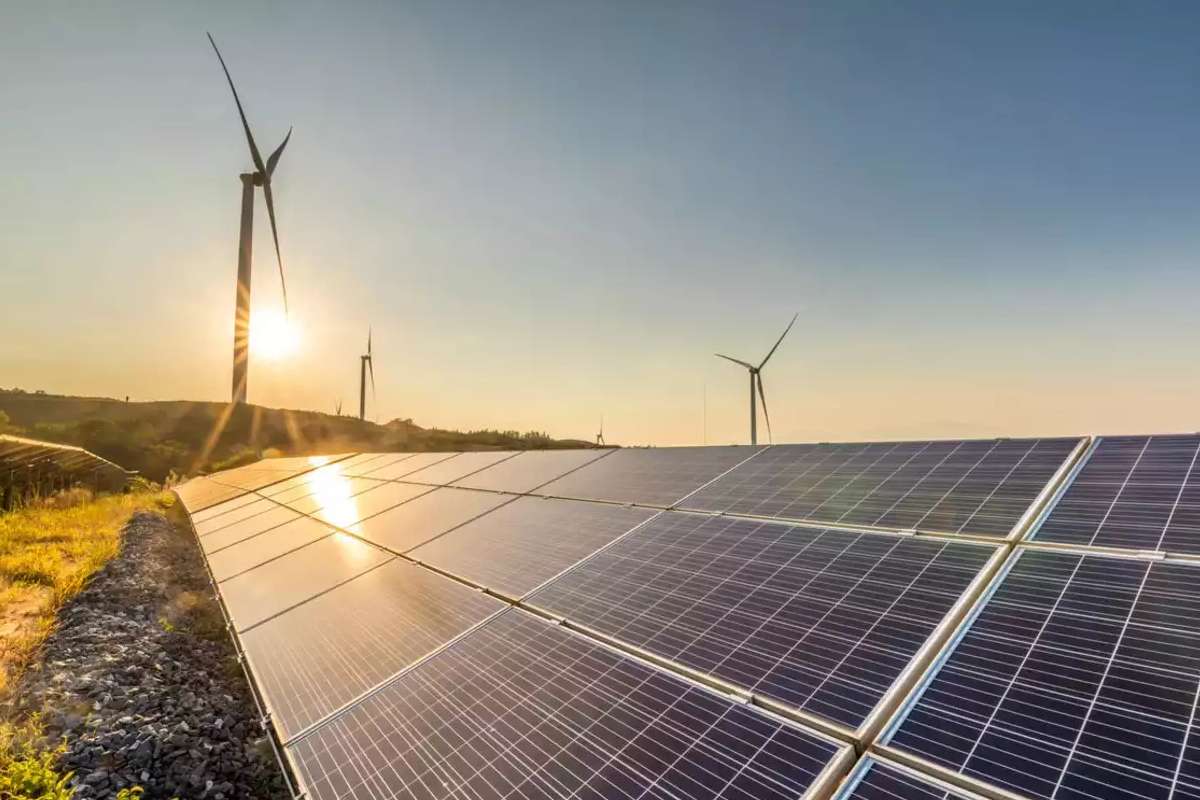
We can never see a substantial future for solar, wind and
the so-called renewable energies. They may evoke all sorts of emotional
responses but their ability to pick up a sizeable portion of future energy is
limited.
We see two potential energy sources for the future: nuclear
fission and fusion for stationary energy.
From Vision to
Implementation
Of course, all visions, far-reaching and rational as they
may be, may find implementation more difficult.
The world is run by government fiat, it is not likely that
the U.S.
government would pay to increase the capacities for facilities needed for
importing liquid natural gas into the country. Shortages are the most
convincing impetus for investment. It is no longer speculation but a fact that
effectively all electric power plants planned or under construction will be
limited only by the capacity of the U.S. turbine manufacturers in the
foreseeable future. The result will be profound.
The winter peak will become larger, but the summer negative
peak will go away and may even become positive. Air conditioning demand has its
own peak. Gas storage adds both a mitigating and potentially destabilizing
element. Gas shortages will be almost inevitable during these years of
transition and will cause power shortages. Brownouts are not just likely; they
are certain. And because the U.S.
electricity supply is now extensively tied up in so-called “reliability
regions,” the power grid is inflexible.
Transformation of
the Business
The information revolution is transforming the petroleum
industry. The global reach that is entailed by the most advanced and newest
information technologies fits very well with the eminently global petroleum
business.
An industry that has been committed to free trade throughout
its history should be expected to eagerly embrace the new mechanisms that break
down barriers—be they economic, cultural or political.
We are bullish on the energy industry and incurably
optimistic on its future and the future of the world.
If there is one thing that we would like to accomplish with
this book is to educate people on the topic of energy and its impact. Often, it
is astounding how energy-illiterate people are, many thinking that electricity
is a form of energy, instead of a form of power, and others believing that wood
burning accounts for 30% of the world energy mix when, in fact, it may be less
than one tenth of one percent.
Energy and its appropriate deployment is the most critical
of all wealth-generating activities and it is the most important modern
indicator of the wealth and poverty of nations. Society and energy will merge
in an unbreakable bond for the entire future of humankind.
Abundant and cheap energy should always be the goal: Wealth
through Energy.
Governments, while they should stay out of the petroleum
business, should enable its future by funding critical long-term research on
future technologies. In view of the significant time lag between R&D and
implementation this is an appropriate role of government.
Maintaining a rich energy future will be challenging, it
will require the best management and technology man can master, will demand
constant attention to cost but will have enormous and gratifying benefits.
Chapter 10~Grey
On September 11, 2001 the color of oil became grey. The
two-decades built optimism that engulfed the United States and much of the rest
of the world suddenly took a dour hue, a sinister grey. The royal purple color
faded, at least for the foreseeable future.
Wealthy, Saudi Arabia has played a huge
role in the fundamentalist Islamic resurgence as the world’s largest
producer of petroleum origin of the most imposing oil and gas reserves and
almost all of the 19 identified hijackers. Oil, the West’s only real
interest in the region, has provided much of the funding for terrorism.
The cauldron of Arab and Islamic discontent never hit so
hard and close with such diabolical efficiency and mystifying stealth. Diverse
ends of the political spectrum could not believe the obvious.
For the previous 50 years the international commercial
aviation was based on a simple principle. Sane people do not commit suicide
with explosives in their suitcases. More to the point the notion of the
teenaged, disenfranchised, poverty-stricken suicide types in many cultures did
not fit the middle-class, university-graduate, in their thirties-with-families
hijackers.
The Evolution of
the Middle East
Much of the situation today is more a case of a cultural
conflict between the West and Islamic nations, whose culture does not adjust
and absorb to modernity. Religion becomes a catch-all, rejecting what could not
be assimilated and promoting the goodness of the differences justifying the
status quo.
European colonialism, explicitly the result of cultural and
economic imperialism is one of the roots of the problems today.
An agreement between Britain
and France
in 1916 accepted the principle of Arab independence. The agreement divided the
region into zones of permanent influence.
While it is easy now to be a revisionist or re-interpreter
of the history of those events, at that time, among Europeans and Americans,
the idea that super-powers Britain
and France would be awarded
Protectorates in the Middle East was natural
and highly desirable. There was little regard or thought about the public
opinions of Arab and Moslem people, the vast majority of which were illiterate.
The few Arab intellectuals were themselves products of the colonial system and
its view of the world. The newly established League of
Nations formally granted the Anglo-French Mandates in 1922. The
idea for the establishment of a Jewish state was driven not only by Zionism, an
intellectual and political movement that existed for decades, but also European
notions of human rights and national self-determination.
Israel’s right to
exist has a liberal political motivation, prompted by a sense of European guilt
of horrors of the Holocaust.
Israel is a nation with
western sensibilities of human rights, democracy and to a large practical
extent, a separation of church and state. Israel’s western outlook is
also the cause of much of the Islamic rage towards the west, what they see as
the modern manifestation of the Crusades, not a refuge of the long-suffering
Jews of the Diaspora.
The Israeli presence has also been a very convenient reason
to explain away Arab and Moslem failures.
How could a country of three million people, the Moslem
logic goes, keep it’s own against hundreds of millions of Arabs? The West
must be behind everything. It could not be Israeli air force pilots that
totally destroyed the air forces of both Egypt
and Syria.
It must have been American and British pilots, manning planes with just painted
Israeli insignia.
In the name of the struggle against the West and its proxy, Israel, there has not been a single democracy
from Morocco to Pakistan and
beyond. The struggle becomes a clarion call for those outside of power to claim
the religion as a means to cleanse and purify their religious heritage.
Political opposition, a hallmark of democracy in the West became treason,
punishable by death.
The Vacuum and the
Emergence of Militant Islam
The most frequently asked question in the United States and Western
Europe after the September 11, 2001 carnage is one word–Why?
When Gamal Abdel Nasser consolidated power in Egypt in the
1950’s his modern themes of self-determination, socialism and Arab unity
sparked a fire in the Arab world. Arabs thought that their dreams of
independence and self-determination finally were becoming a reality. Nasser came from a very modern background. He was born in
Alexandria,
under British rule. He spent his youth in the army, the most Westernized
section of the society. He wore Western style suits and dark shades. Almost
immediately he became “The Lion of Egypt” and unquestionably the
most beloved man in the Arab world.
At the time, practically every Arab and Moslem country
desperately wanted to join the modern world. But all failed.
Mix in poverty-driven civil unrest, lack of jobs and a huge
“youth bulge” and there is a recipe for disaster. More than half of
Arab countries’ population is under the age of 25. History has
demonstrated repeatedly that a huge increase of restless young men in any
country leads to social upheaval.
The modern Islamic fundamentalist movement started in 1954
when Nasser cracked down on the Muslim
Brotherhood, imprisoning more than a 1,000 of its leaders. While imprisoned,
one of the leaders, Sayyid Qutub wrote the book that has become the modern
political Islamic manifesto, “Signposts on a Road.” Qutub called
for a government that was based on strict Islamic principles.
Saudi Arabia: Oil and Islam
All hell broke loose when in 1979 Ayatollah Ruhollah
Khomeini toppled the Shah of Iran and brought about a sudden and very decisive
re-Islamization of Saudi
Arabia.
Mosques throughout the region became places for militant
politics to be discussed and provided social services, medical assistance,
temporary housing and counseling. Where “modern” governments
failed, Islam would provide, and where it couldn’t it could blame the
authorities and their infidel protectors.
Saudi Arabia, acutely aware of
the movement within tried to appease both sides. It is fair to say that the
Saudi royals have had the most difficult act of governance in the world. While
they have been allied with the United States
they funded madrasas (religious schools), not just in Saudi Arabia but everywhere, from Egypt to Pakistan
and Afghanistan
and the former Soviet Islamic republics. A central part of the curriculum tells
of an America
that is the evil empire of sin, where women show their legs and where everyone
drinks alcohol, where homosexuality is rampant.
The Saudi royals stayed in power deftly walking a tightrope
that was made easier by oil money. It bought a semblance of stability for years
but dangerous signs are everywhere, the most striking of which is just this:
the per capita income of Saudi
Arabia with a population whose average age
is 25 has dropped from a high of $17,000 a decade ago to $7000 today.
Bin Laden’s appeal to the Arab and Moslem masses is
perhaps the single-most important element that simply cannot be fathomed by the
vast majority of American and European citizens.
The question must then be asked, “can the Saudi royals
withstand the public pressure put on them by the Saudi people?” Can they
maintain their ability to produce and sell oil?
Energy after
September 11, 2001: First, the Jobs Story
A careful study of US
employment throughout the OPEC era provides a rather stark conclusion: every
period of negative U.S.
job growth has been preceded by a major energy supply disruption.
Petroleum Supply
Supply of oil in the world today and the foreseeable future
means almost singularly the Middle East. Saudi Arabia is
by far the world’s largest exporter of oil with a capacity to increase
supply far beyond past levels.
Changes will happen naturally and natural gas may become the
premier fuel for our economic future. Natural gas supply broadens and
diversifies the energy debate. Countries that are also-rans or not even members
in OPEC today will gain new prominence. Importing massive quantities of natural
gas will create a new era of international energy because gas resources are not
necessarily distributed in relation to oil sources. This transition will not
come easy as building infrastructure of any kind is painful and will go through
major growing pains.
Susceptibility of oil and natural gas infrastructure to
terrorist threats
The main effect of terrorism is to generate terror. The
petroleum industry deals with threats and real danger every day, around the
world. A pipeline in Colombia
was exploded 107 times in 6 months before they temporarily shut in their giant
oilfield in the Llanos
Basin. In almost all
countries from Venezuela to Algeria to Papua New Guinea to throughout
Sub-Saharan Africa petroleum production facilities resemble armed camps with
security that surpasses that of real armed camps.
The industry may sustain injury from terrorism, but in not
being deterred, it may in fact contribute very positively in winning the war
psychology.
The inescapable
energy demand
The transition from wood to coal to oil to natural gas is a
historical imperative that has little to do with the arguments of shrill
environmental ideologues.
Natural gas is promoted by something we call inverse economy
of scale. While nuclear and coal require massive plants to reach economy of
scale, not many sides can either afford or need the 2000 MW power capacities
that such economies require. Natural gas power generation becomes more
attractive as the power plants become smaller breeding diversity and
efficiency.
In spite of this exciting potential for the future, the West
and especially the United States
are still and continue to be highly dependent on Middle
East oil.
United
States Policy in the Middle East
The United States
foreign policy in the Middle East has been formed ever since the end of World
War II, when the United States
supplanted Britain
as the dominant Western power. The policy included three elements:
Containment of the Soviet Union.
Petroleum supply.
Policy based on domestic US pressures and moral premises and
affinity towards Israel.
The Last Gulf
War
On March 20, 2003 President George W. Bush announced that he
had ordered the coalition to launch an "attack of opportunity"
against specified targets in Iraq.
On April 9 Baghdad
fell and by April 15 with pockets of resistance completely eradicated. Hussein
and his entire government were decimated or disappeared.
It may be a good thing for the U.S. and Western relations in the
Arab street to behave dynamically once in a while. The Arab world understands
and generally respects power.
All of this comes with some potentially wrenching
psychological effects. The ease of Saddam’s demise certainly portents bad
news for the leaders of practically all countries in the Arab and Moslem world.
Instability may become the norm and the United
States will have difficulty defending its allies in Egypt, Jordan
and the most vital of them all, Saudi
Arabia.
Invading Iraq
and occupying it proved quite easy. Managing the country afterwards is rife
with real and unpalatable public perception problems.
There will be an acute tension between maximizing Iraqi oil
production and managing oil prices by adhering to OPEC quotas.
The 1969 Vienna Convention, which the United States
prominently signed describes that part of Iraqi oil can be used for the
occupation's military cost, but the rest of it must be used strictly for the
benefit of the Iraqi people and the reconstruction of the country.
Next, the U.S.
will face a public relations nightmare as steps are taken to re‑establish
and increase Iraqi oil production. This work will be done with heavy
involvement by U.S.-based oilfield service companies as these companies are almost
exclusively the vendors of petroleum technology worldwide.
An Obvious New Middle East Policy
What is then left that could shape the future American
policy in the area? Not much outside of oil. This would mean that only five
countries, Saudi Arabia, Iran, Iraq,
Kuwait and Libya have the
potential to affect the American economy. They are also the countries where
American strategic interests focus.
Oil and natural gas are what the United States and the developed
World want from the area and the multinational oil companies should become the
vehicles for any new policy.
The first economic policy step by the United States in the Middle
East should be to “encourage” privatization or
re-privatization of the oil sector in the five major producing countries. The
relationship should be clear from the start, just business. If oil and natural
gas production should be done and transported in military style settings, the United States
can support lavishly the necessary security.
Reliance on highly accessible and affordable Middle East oil is now, and for the foreseeable future,
an irreplaceable element for our economy. There should be no doubt that any
military doctrine by the United States
clearly must have an uninterrupted flow of Middle East
petroleum as a central theme.
About the Author:
MICHAEL J.
ECONOMIDES is a Professor at the Cullen College of Engineering, University of Houston,
and the Managing Partner of a petroleum engineering and petroleum strategy
consulting firm. His interests include petroleum production and petroleum
management, a particular emphasis on natural gas, natural gas transportation,
LNG, CNG and processing, advances in process design of very complex operations,
economics and geopolitics. He is also the Editor-in-Chief of the Energy Tribune (www.energytribune.com).
Previously he was the Samuel R. Noble Professor of Petroleum Engineering at Texas A&M
University and served as
Chief Scientist of the Global Petroleum Research Institute (GPRI). Prior to
joining the faculty at Texas A&M University,
Professor Economides was the Director of the Institute
of Drilling and Production at the Leoben Mining
University in Austria. Before
that, Dr. Economides worked in a variety of senior technical and managerial
positions with a major petroleum services company. Publications include
authoring or co-authoring of 11 professional textbooks and books, including The
Color of Oil and 200 journal papers and articles. Economides does a wide range of
industrial consulting, including major retainers by national oil companies at
the country level and by Fortune 500 companies. He has had professional
activities in over 70 countries. In addition to his technical interests he has
written extensively in wide circulation media in a broad range of issues
associated with energy, energy economics and geopolitical issues. He also
appears regularly as a guest and expert commentator on national and
international television programs.