

 |
|
|
|
 |

|   |
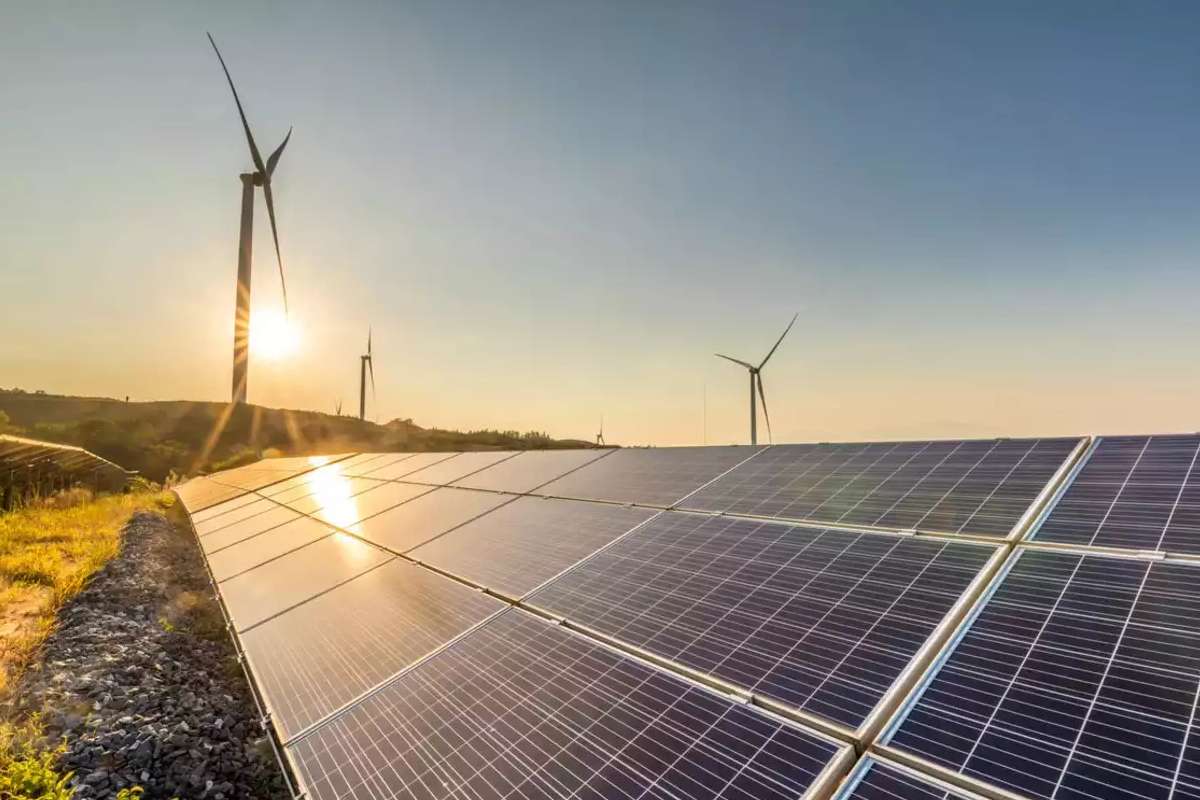
As we at CARE became aware of the activities of the Gang Green, we questioned their motives. It appears that their plans will end the America we know and love. We wondered, “Why are they doing this?” As we have seen, they do not like any energy source—they even oppose the so called “darlings” of the energy world: wind and solar.
We took our questions to people with more experience and expertise in both energy and in dealing with the Gang Green than we had. Marita Noon, CARE's Executive Director, came in contact with many of these people while she was in Washington, DC for a meeting.
One person, who ran a government agency, shared that the environmentalists do not want to see economic gain from the effective use of people’s property. He said that they use the courts case-by-case, permit-by-permit to increase the costs of someone using their own property with the goal of discouraging the development of that property. Marita did not understand how they could do this. He explained that if a person owns a piece of property, he needs a permit to do anything on it—even building a house. Because the permitting process is so backlogged, the property has a much higher value if it is already permitted. He said that in his department staffing shortages have caused them to be six months behind in permitting.
This brought almost more questions than answers. Why is the permitting process so complicated? His answer was this: During the Clinton administration, all of the people in the Environmental Protection Agency, and other like departments, were personal appointees of Al Gore’s. They deliberately wrecked the regulatory process to put an end to economic development. He feels certain that the reason we have such trouble developing our oil and gas resources in America is the regulatory process.
“Why do they do this?” Marita kept asking. Here’s the answer she got from another experienced person she spoke with on that same trip: The Gang Green want everyone to move into cities where they are easier to control. They want to get rid of inefficient human patterns—which is what happens when people live in rural locations.
It became clear that “control” was really the issue. A complete picture began to emerge and the painting looked a lot like a watermelon: green on the outside and red on the inside.
The first time the watermelon analogy was presented to Marita, she said, “I was not quick enough to get it. I had to ask for clarification. Green was obvious as “green” is the common term for all things environmentally friendly. But red? I guess I am too young (or like to think I am) to automatically think of red as representing communism or socialism. Once that explanation was presented to me, I had a long slow gasp, ‘Ohhhhh!’ I got it.”
Of course, the Gang Green do not fit the true Marxist model, but in the general sense, the idea of “red” explains a lot. Columnist George Will says, “Today’s ‘green left’ is the old ‘red left’ revised.” In his op-ed on polar bears, he states, “The left exists to enlarge the state's supervision of life, narrowing individual choices in the name of collective good. Hence the left's hostility to markets. And to automobiles--people going wherever they want whenever they want.” And there is the “red.”
George Will continues, “The green left understands that the direct route to government control of almost everything is to stigmatize, as a planetary menace, something involved in almost everything--carbon. Environmentalism is, as Lawson (author of An Appeal to Reason: a Cool Look at Global Warming,) writes, an unlimited ‘license to intrude.’ ‘Eco-fundamentalism,’ which is ‘the quasi-religion of green alarmism,’ promises ‘global salvationism.’”
This increasing government theme is repeated in the writings of Fred L. Smith, Jr., President of the Competitive Enterprise Institute. In an article titled, Eco-Facism Going Global, he says:
We can say this for environmental activists-they are persistent, constantly developing collectivist schemes to increase the size and scope of government. And they are becoming more ambitious.
Not content with giving more power to Uncle Sam, they now seek to give greater power to the United Nations, a move that would seriously undermine American sovereignty and pave the way for top-down global wealth transfer schemes that would make the Great Society look small. Let's take a look at two such schemes.
The Law of the Sea Treaty: This treaty would give the U.N. the power to regulate and tax deep-sea mining and redistribute the receipts to Third World governments. It would simultaneously legitimize the principles of green collectivism and global income redistribution. President Reagan rejected the treaty in 1982, but a loose coalition of interest groups and activists are now working to revive this monster.
The Kyoto Protocol on “climate change”: This treaty seeks to restrict global greenhouse gas emissions, including those of carbon dioxide-the inescapable by-product of energy production. Kyoto's backers ignore the lack of evidence for catastrophic warming and the dire economic consequences of an energy-starved future, but no matter. They seem most interested in Kyoto's wealth transfer potential. Statements by one U.N. official suggest that if Kyoto took effect, the U.N. would ask rich countries to provide “funding” to poor countries to “help [them] better adapt to climate change” in the name of global “equity.”
Notice how these two eco-collectivist treaties would give the U.N. control over large sums of money. The Iraqi oil-for-food program scandal has given us a stark lesson on how the U.N. handles funds. As P.J. O'Rourke said about another group of bureaucrats, giving the U.N. more money and power would be “like giving whiskey and car keys to teenage boys.”
The pieces of the puzzle are beginning to fit together.
Marita says, “However this thinking is totally foreign to my thinking. I had to wonder about the root. The man quoted earlier, who ran the government agency, said that the Green Gang operated as a result of a 1960’s and 1970’s mindset they had never grown out of. I graduated from high school in 1976, so I am a product of that generation, but I did not think like that. I needed to look deeper.”
One of CARE’s members suggested that Marita read a specific book written in the early 1970’s: Cows, Pigs, Wars and Witches. She wondered how a book by that title could help her on the quest. The subtitle is The Riddles of Culture. Still no clue. He said to hang in through the whole book as it came together at the end. It was Chapter 11 that gave us insight.
The Gang Green—those who are green on the outside and red on the inside are operating on the remnants of their 1960’s 1970’s mindsets. Back in the day, the mindset was, according to Cows, Pigs, Wars and Witches, referred to as the counter-culture or Consciousness III.
One of the first things that caught our attention was this description of counter-culture: “Counter-culture celebrates the supposedly natural life of primitive peoples. Its members wear beads, headbands, body paint, and colorful tattered clothing; they yearn to be a tribe. They seem to believe that tribal peoples are nonmaterialistic, spontaneous, and reverently in touch with occult sources of enchantment.” While much of that comment is totally 70’s, the idea of the primitive peoples, of the tribe, seemed to have a current quality to it. It helped to understand the apparent hatred of modern development and the inherent desire to go back to caves.
Going back a few paragraphs and reading with a different focus we found the general introduction of this mindset:
“The unexpected resurgence of attitudes and theories long held to be incompatible with the expansion of Western science and technology is associated with the development of a lifestyle which has been given the name ‘counter-culture.’ According to Theodore Roszak, one of the movement’s adult prophets, counter-culture will save the world from the ‘myths of objective consciousness.’ It will ‘subvert the scientific worldview’ and substitute a new culture in which the ‘non-intellective capacities’ will reign supreme. Charles A. Reich, another minor prophet of recent years, speaks of a millennial state of mind which he calls Consciousness III. To achieve Consciousness III is ‘to be deeply suspicious of logic, rationality, analysis, and of principles.’
In the lifestyle of the counter-culture, feelings, spontaneity, imagination are good; science, logic are bad. Its members boast of fleeing “objectivity” as if from a place inhabited by plague.
A central aspect of counter-culture is the belief that consciousness controls history. People are what goes on in their minds; to make them better, all you have to do is give them better ideas. Objective conditions count for little.”
Ah. No wonder the fact that you cannot power the world on wind or solar power doesn’t phase the Gang Green in their insistent push for ineffective systems. They believe that if they say it enough, it will be so. “Science, logic are bad.” “Objective conditions count for little.”
See if you don’t agree that the following sentences from Cows, Pigs, Wars and Witches don’t sound like the Gang Green we have come to know. As you read, try replacing the word “superconsciousness” with the word “Environmentalism.” “Its advocates insist that superconsciousness can make the world into a more friendly and more habitable place; they see flight from objectivity as a politically effective way to achieve an equitable distribution of wealth, recycling of resources, abolition of impersonal bureaucracies, and the correction of other dehumanizing aspects of modern technocratic societies. …Capitalism, the corporate state, the age of science, the Protestant ethic—all represent types of consciousness, and they can be altered by choosing a new consciousness.”
We now believe the message has percolated down through the years. The counter-culture has been successful in bringing about a new consciousness. Later, chapter 11 says, “Consciousness III will destroy the corporate state ‘without violence, without seizure of political power, without overthrow, of any existing group of people.’ Counter-culture is sworn to attack minds, not capital gains or depletion allowances. … The hope that counter-culture will transform society into ‘something a human being can identify as, home’ rests on the fact that it is a middle-class movement. What makes it so important ‘is that a radical rejection of science and technological values should appear so close to the center of our society, rather than on the negligible margins. It is the middle-class young who are conducting this politics of consciousness.”
For 40+ years, they have continued quietly “conducting this politics of consciousness” with results the author of the book could have never imagined. As we have seen, they mostly do not hold political office. Without violence, they have attacked minds. They have transformed society—all while we were sleeping.
Toward the end of the chapter, the author, Marvin Harris, again quotes Theodore Roszak, stating that the primary goal of counter-culture is to proclaim “a new heaven and a new earth.”
In general, with each of the thirty plus year old quotes, if you replace the words “counter-culture” or “Consciousness III” with “environmentalism,” they could have been written today. The environmentalists do definitely dream of a new earth. As can be seen in CARE’s Environmental Utopia Study, they have visions of a utopia. They do not have any real plans as to how we will get there. But they are conducting a politics of consciousness and they have managed to transform much of society into believing with them. America as we know it is bad, but if we follow their plan, we will have a new earth—and it will not look much like the country people are risking their lives to get into. It will not be a super-power. Instead it will be a superconciousness, looking more like a hippie commune than the wealthiest nation in the world.
Like Ben Stein, most of us would not want to live without the modern conveniences we’ve come to count on. We do not want to live in a hippie commune. Here is Ben’s commentary on the topic:
Let us now praise famous men. Let us praise Willis Haviland Carrier, the main inventor of the greatest gift to mankind since the constitution. Namely air conditioning. Like most Americans of my generation, in most parts of this nation, as a child I approached summer in my hometown in Maryland with dread. The heat and humidity were unbearable. Sweaty oppressive days. Torture trying to sleep in painfully drenched in perspiration sheets, wet from fever cruel heat.
Summer car travel was genuine agony. The only place of refuge was a few air conditioned stores and all movie theaters. I often wonder if movies seemed so much better in those days mostly because of the air conditioning in the theater.
Then, one miraculous day in 1955 my parents bought me a little window Carrier air conditioner. Paradise! I worshipped that machine. Then in 56 my dad got the whole house air conditioned. The mood in the home was permanently better.
Now, of course, we take air conditioning for granted. Or, maybe not. I thank Mr. Carrier every time I press the buttons, twirl the thermostat, breathe in cool, gorgeous air, take those negative ions into my blood stream, feel protected from the vicious heat of summer.
Now, I know we all have to be careful about energy, but we have to be careful not to die from heat. When I think what air conditioning does, what a miracle it is in terms of human well being, what a change it has made in human happiness, I am humbled. Take away my Cadillac if you must. Make me wear a sweater and a coat in winter indoors. Make me do anything else, but please leave me with that gift from Mr. Carrier and his colleagues. Long may it cool.
For you, maybe it is not the air conditioner—though probably none of us would really want to live without it. Most of us would have a hard time picking just on modern convenience we would not want to live without. You might think, "I really like hot water when I turn the handle. My cell phone is very convenient. I do like clean clothes. Then there is my car. Oh, my computer!"
If you like the freedoms and luxuries that make America great, you, too, can thank Willis Haviland Carrier. But on the bigger scale, you’d better thank energy as it is what separates us from the undeveloped countries. Thank energy--and smash the watermelons!
|
|
|
 |
|